The island
Grand Isle is a barrier island on the Gulf, built from Mississippi River sediment, with one of the last live oak chenier forests on the Gulf Coast. The town calls itself Louisiana's only inhabited barrier island. LA Highway 1 ends here, and the causeway at the west end is the only road in or out.
People have fished here for as long as anyone has lived here. The Chitimacha were the first known inhabitants. After the Spanish divided the island into four land grants in the 1780s, settlers harvested shrimp and oysters, and some traded with Jean Lafitte's privateers. By the 1800s New Orleanians were coming down by steamer for the beaches and the fishing.
The town counts more than 280 species of fish and four seasons of fishing, from the surf, the piers, boats and charters. Its seafood docks sell jumbo shrimp, softshell crabs, lump crabmeat, oysters, mahi and tuna, which tells you most of what you need to know about dinner.
Rodeo season is the food season
The International Grand Isle Tarpon Rodeo is the big one, held in late July. Its organizers call it the oldest fishing tournament in the United States and date it to 1928. Around it the island runs about a dozen rodeos a season, from the Hurricane Hole Invitational in May to the Ladies Rodeo in October, with two redfish rodeos in September.
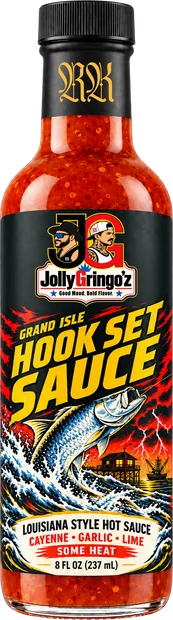
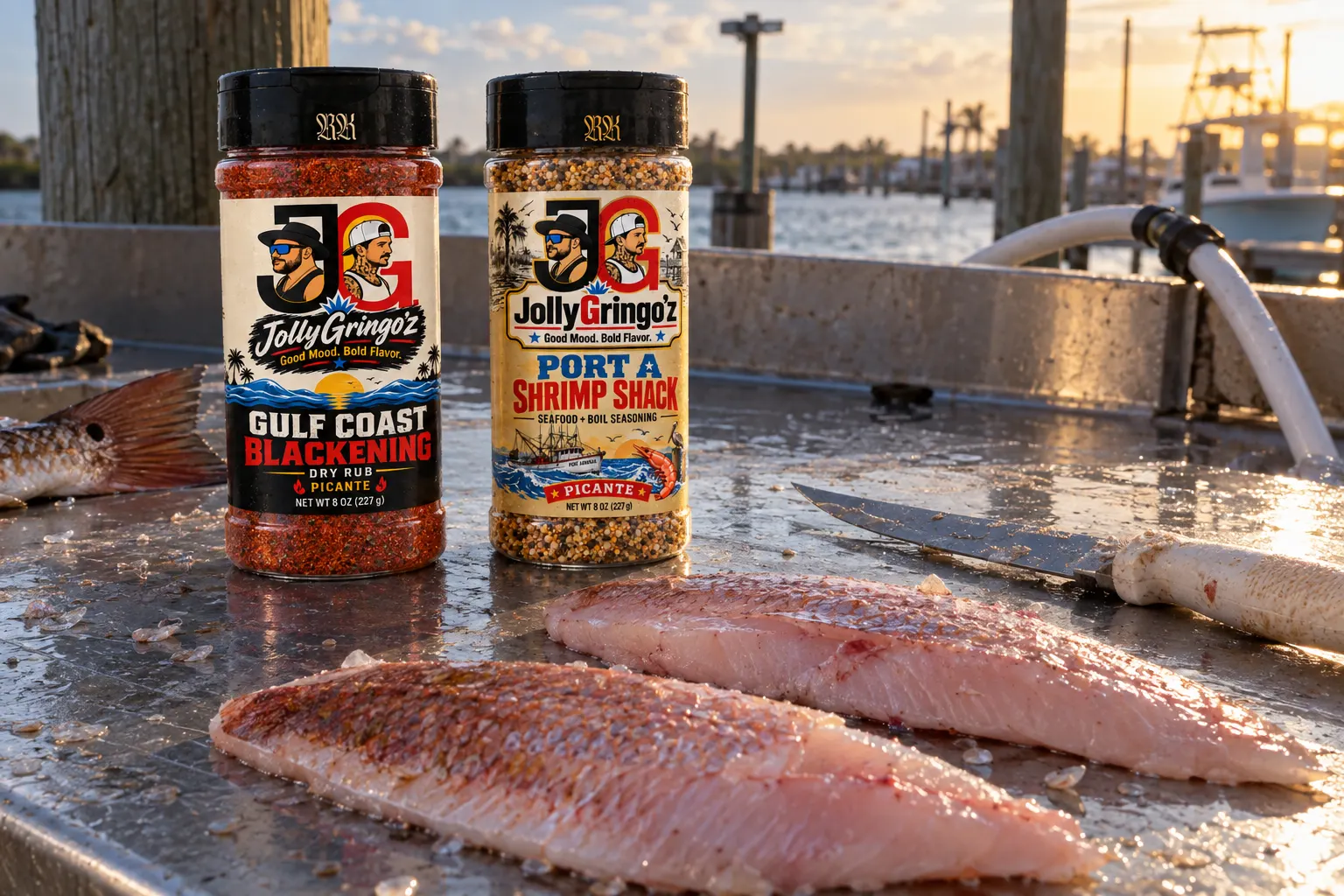
That is the island's food story. Fish get weighed, cleaned at the dock and cooked the same evening, and the Tarpon Rodeo's welcome party serves free boiled shrimp plates. Our Grand Isle Hook Set Sauce is named for the island and for the moment the fish takes the bait, and it is built for exactly this food: boiled shrimp, fried fish, oysters and gumbo.