From Evergreen to a shrimp port
Kemah sits on State Highway 146 at the mouth of the Clear Creek Channel, looking out over Galveston Bay. In 1898 the Kipp and Bradford families laid out a townsite here beside the new Texas and New Orleans Railroad and called it Evergreen. A storm flattened it in 1900, the families built big homes and started again in 1901, and when a post office came in 1907 the town took a new name. Kemah, the city says, is a Karankawa word meaning facing the winds.
Water paid the bills from the start. The Texas Historical Commission marker at City Hall credits boat building, commercial fishing and tourism with growing Kemah to about 1,300 people by 1922. A bridge tied it to Seabrook in 1929. Then, after the Clear Creek Channel opened in the 1950s, a large shrimp fleet settled here, and for a generation Kemah was a shrimping town. It took heavy storm damage in 1961, recovered, and incorporated in 1965.
The waterfront looks different now. The 60 acre Kemah Boardwalk opened in 1998 and is the city's biggest attraction and largest employer, with the Lighthouse District of restaurants and shops beside it. The shrimp boats that built the place are fewer, but the town has kept the ceremony that honored them.
The Blessing of the Fleet
Every spring decorated boats line up in Clear Lake and parade down the Clear Creek Channel past the Boardwalk, where a pastor blesses each one for a safe and plentiful season. The Daily News in Galveston described it as a tribute to the area's fishing and shrimping culture. In 2023, the 55th year, crews threw beads to the crowd on the Boardwalk and judges scored the boats as they went by.
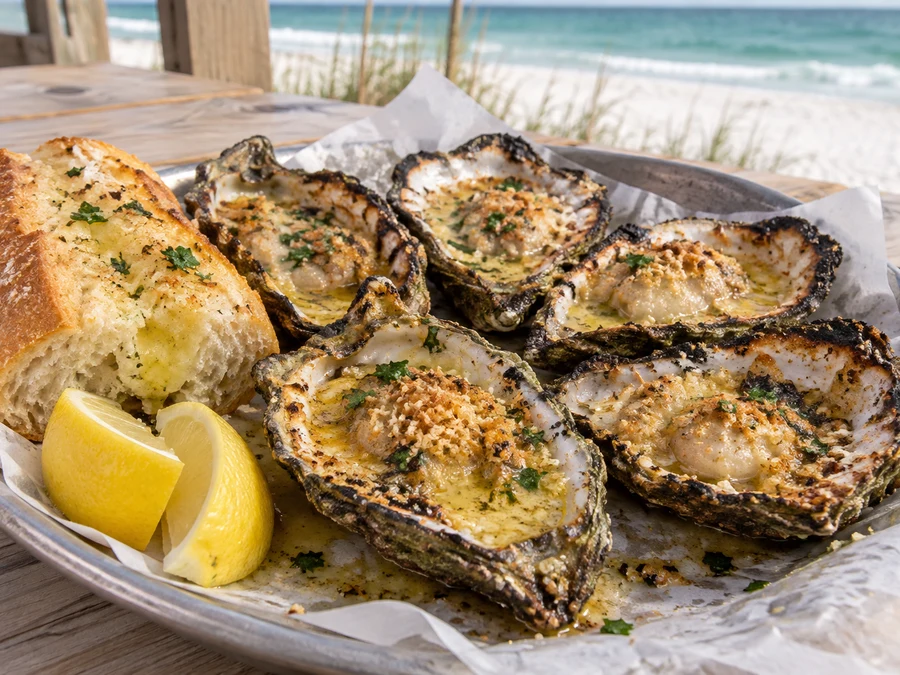
The water the fleet works is Texas oyster country too. Texas Parks and Wildlife has noted that every private oyster lease in the state lies in Galveston Bay, and that most of the public reefs fished in Texas are in Galveston, Matagorda and San Antonio Bays. Public oyster season runs November 1 to April 30, weekdays only, in areas the state has open.