Barbecue shrimp, explained
New Orleans barbecue shrimp is credited to Pascal's Manale, the Uptown restaurant Frank Manale opened in 1913. Around 1954, the story goes, a regular described a shrimp dish he had eaten in Chicago, and the cook made something between a scampi and a fra diavolo.
The name stuck, and it has confused visitors ever since. The dish is shrimp cooked in a sauce that is mostly butter and black pepper. It is not smoked or grilled, and there is no barbecue sauce anywhere near it. Cooks add garlic, Worcestershire, lemon and Louisiana hot sauce, sometimes beer or white wine, and serve it with French bread to soak up the sauce.
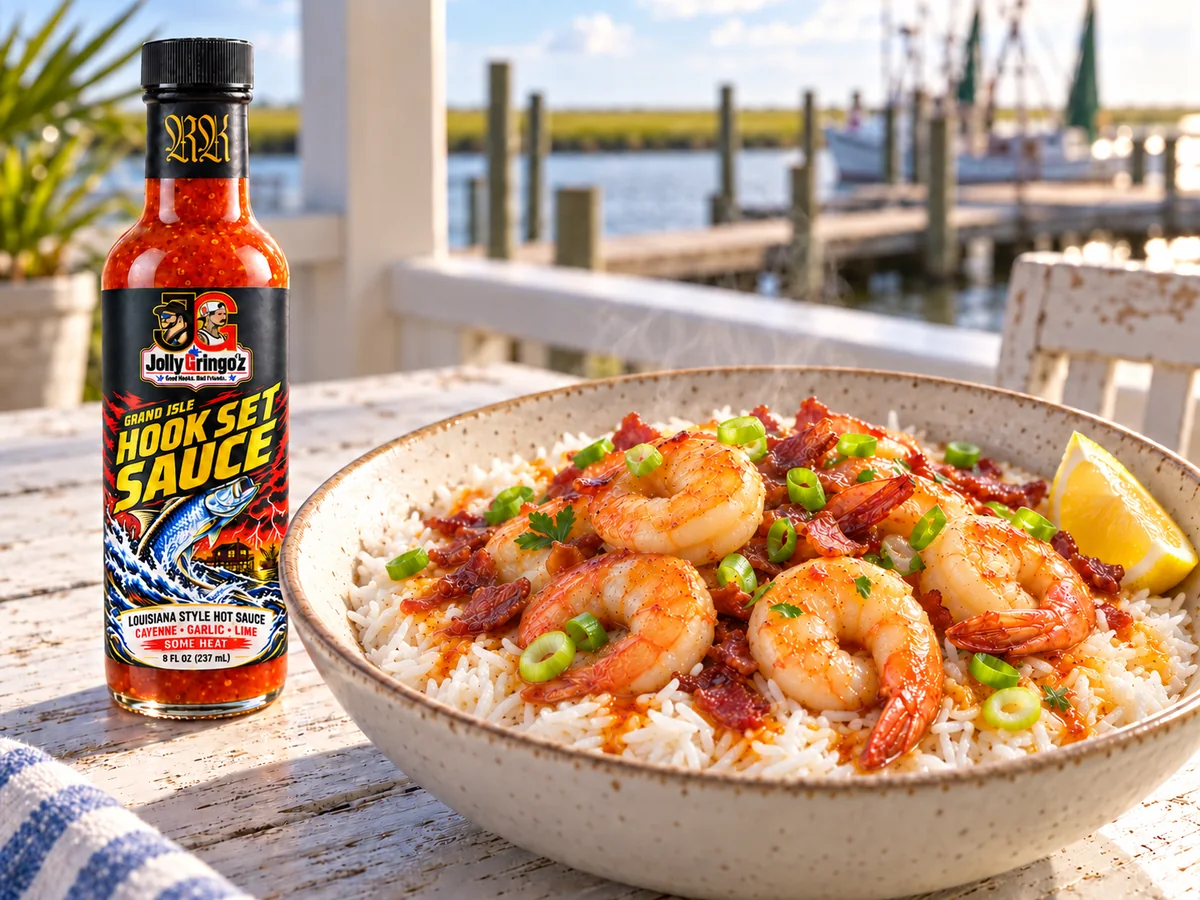
So if you came here looking for a barbecue sauce for barbecue shrimp, you do not need one. You need butter, pepper and good bread. We do make a Louisiana style hot sauce that belongs in the pan, and the recipe below shows where.
The rest of the plate
Two more local classics come with stories. The po-boy is usually traced to Benny and Clovis Martin, former streetcar conductors who fed striking streetcar workers free sandwiches during the 1929 strike, though historians note that account did not appear in print until 1969. The muffuletta is usually credited to Salvatore Lupo, a Sicilian immigrant, around 1906, at the French Quarter shop that became Central Grocery.
The Louisiana Legislature made gumbo the official state cuisine in 2004, and in 2008 it named the Sazerac the official cocktail of New Orleans. In early summer the Creole tomato gets its own festival in the French Market.
For the actual barbecue, the city has Hogs for the Cause, a spring competition with about 90 teams and more than 30,000 people that raises money for families of children with brain cancer.