What Lake Charles eats
Lake Charles sits on the Calcasieu River and the lake of the same name, about 30 miles upstream from the Gulf, with a deep water ship channel running to the coast. It is the seat of Calcasieu Parish, and locals call it the Festival Capital: the tourism bureau counts more than 75 fairs, festivals and events a year.
Rice built the place. The Calcasieu Historical Preservation Society describes Lake Charles as once the epicenter of the American rice industry, where for a time the price of American rice was set. A good share of that rice ends up in the region's favorite finger food. Visit Lake Charles defines boudin as pork, liver, rice, onions, parsley and dry seasonings, bought by the pound.
The Southwest Louisiana Boudin Trail follows I-10 through mom and pop shops, specialty meat markets and grocery stores, with dozens of stops and a guide you can download from the tourism bureau. The city has a live fire side too. Smoke and Barrel pairs bourbon and whiskey with barbecue from the region's pitmasters, and the Louisiana Food and Wine Festival holds a Fire on the Lake night with a Best BBQ award.
Big Lake: trout, reds and hand tonged oysters
South of the city, Calcasieu Lake, which everyone calls Big Lake, is known for big speckled trout. Guides treat 5 to 8 pound fish as normal, and May is often a strong month for them. Redfish run strong from August through the fall, with bull reds along the jetties in summer and during the fall mullet run. In winter, trout and reds hold in deep water by the ship channel.
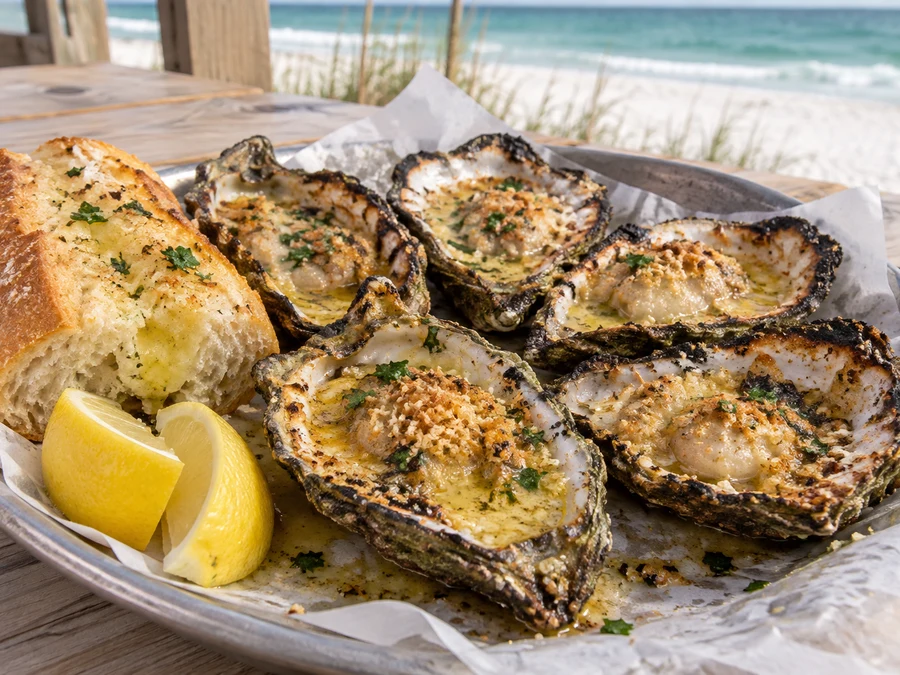
The lake is shallow, averaging under 6 feet, with oyster reefs, and it has a rule no other public oyster area in Louisiana's 2026 to 2027 season has: no scrapers. Oysters there may only be taken by tongs or by hand. For 2026 to 2027 the West Cove opened October 19 and the east side November 1, with a limit of 10 sacks per boat per day.